

By the mid‑1960s, the CIA viewed Latin America as one of the most strategically fragile regions of the Cold War. Fidel Castro’s consolidation of power in Cuba, followed by Havana’s increasingly open alignment with the Soviet Union, convinced U.S. policymakers that the Western Hemisphere faced a long‑term ideological and security challenge. Intelligence assessments warned that Cuba was actively training, funding, and exporting guerrilla movements throughout the region. At the center of this strategy stood Ernesto “Che” Guevara—revolutionary theorist, guerrilla commander, and the most charismatic advocate of continental insurgency. When the CIA confirmed that Che had secretly re‑entered Latin America to build a new guerrilla foco in Bolivia, the Agency launched a covert operation designed to prevent what it believed could become a cascade of revolutions across South America.
Why Che Became a Priority Target
Che’s disappearance from Cuba in 1965 immediately raised alarms in Washington. His public writings—especially his call for “creating two, three, many Vietnams”—were interpreted by the CIA as a direct challenge to U.S. influence in the hemisphere. Analysts believed Che intended to replicate the Cuban model: a small, disciplined guerrilla nucleus that would ignite broader rural uprisings, eventually toppling U.S.-aligned governments.
When intelligence reports from multiple Latin American services converged on the same conclusion—that Che was operating in Bolivia—the CIA reassessed the strategic landscape. Bolivia bordered five countries, several of which were already experiencing political instability. If Che succeeded in establishing a durable guerrilla base, it could serve as a launchpad for insurgencies in Argentina, Peru, Brazil, and Paraguay. The Agency concluded that stopping Che was not simply a tactical objective but a strategic imperative to prevent a hemispheric crisis.
JM/WAVE and Mission Preparation
The CIA’s Miami station, JM/WAVE, was the largest CIA base outside Langley and the nerve center for anti‑Castro operations. It maintained a deep bench of Cuban exile operatives, paramilitary specialists, and intelligence officers with years of experience in covert action. From this pool, the Agency selected Félix Rodríguez—a veteran of infiltration missions, sabotage operations, and counter‑insurgency training.
Rodríguez was given the alias “Félix Ramos” and provided with Bolivian Army credentials identifying him as a major. His mission was to serve as a field adviser to Bolivian forces, coordinate intelligence flows, and ensure that the pursuit of Che remained aligned with U.S. strategic objectives. The CIA also coordinated with U.S. Army Special Forces already in Bolivia under a separate program to train the Bolivian Rangers. These Rangers would become the primary strike force against Che’s guerrillas.
The Agency established secure communications channels, arranged for aerial reconnaissance support, and cultivated relationships with key Bolivian military leaders. The operation required a delicate balance: the CIA needed to guide the mission without appearing to dictate Bolivian decisions, preserving plausible deniability while ensuring operational effectiveness.
Bolivia: The Operational Environment
Once Rodríguez and other CIA advisers arrived in Bolivia, they quickly assessed the conditions facing Che’s guerrilla force. Unlike Cuba in the 1950s, Bolivia lacked a widespread rural grievance that guerrillas could easily exploit. Many peasants viewed the insurgents with suspicion or fear, and some actively cooperated with the Bolivian Army. This deprived Che of the local support networks essential for food, intelligence, and shelter.
The terrain, though rugged, was not as favorable as the Sierra Maestra had been. The open valleys and riverbeds of the Ñancahuazú region allowed for effective aerial reconnaissance. The guerrillas’ supply lines were fragile, and their attempts to recruit locals failed almost entirely. Compounding these problems, the Bolivian Communist Party—initially expected to support Che—refused to cooperate after internal disagreements over strategy and leadership.
Meanwhile, the CIA‑trained Bolivian Rangers became increasingly proficient. Their mobility, discipline, and familiarity with the terrain gave them a decisive advantage. From the CIA’s perspective, the operational environment was steadily tilting in their favor.
Intelligence Breakthrough: Capturing Guerrilla Documents
A pivotal moment came when Bolivian forces ambushed a guerrilla detachment and seized a trove of documents, including Che’s diary, maps, and coded communications. These materials were immediately flown to La Paz and then shared with the CIA.
The documents revealed several critical insights:
- The guerrilla force was smaller than previously estimated.
- Illness, hunger, and internal disagreements were undermining morale.
- Attempts to expand the foco into neighboring countries had stalled.
- Local recruitment efforts had failed almost completely.
For the CIA, this intelligence confirmed that Che’s campaign was faltering. The Agency shifted from a strategy of containment to one of active pursuit, tightening coordination with Bolivian forces to exploit the guerrillas’ vulnerabilities.
Tracking and Encirclement
With the guerrillas weakened, the CIA and Bolivian Rangers intensified their operations. Radio triangulation helped narrow down the insurgents’ movements. Aerial reconnaissance flights scanned ravines and riverbeds for signs of camps or trails. CIA advisers encouraged local informants to report sightings, offering food, medicine, or protection in return.
The Rangers systematically destroyed supply caches, intercepted couriers, and blocked potential escape routes. By early October 1967, these tactics had forced Che’s group into the Yuro ravine, where they were running dangerously low on food and ammunition.
Capture in the Yuro Ravine
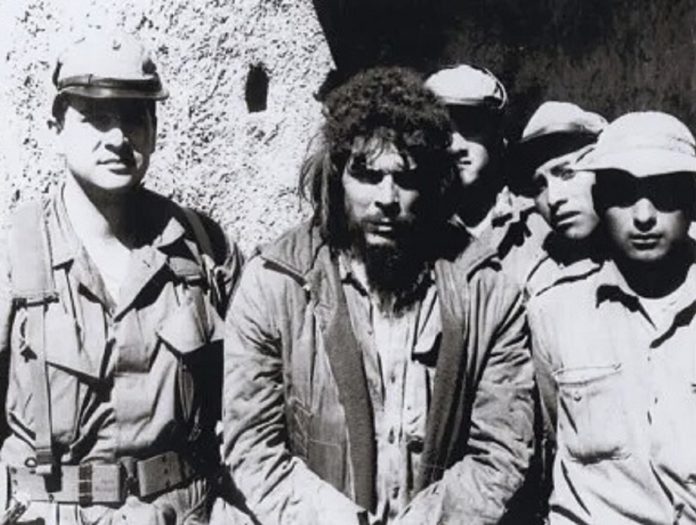
On October 8, 1967, Bolivian Rangers engaged Che’s group in a firefight. Che, wounded and unable to continue fighting, surrendered. He was taken to a small schoolhouse in the village of La Higuera. Rodríguez arrived shortly afterward and conducted an interrogation focused on Cuban networks, guerrilla plans, and foreign contacts.
Rodríguez radioed the CIA station for guidance using encrypted codes. The response he received was deliberately indirect: Washington would not interfere with Bolivian decisions regarding Che’s fate. The Bolivian high command, fearing that a public trial would turn Che into a political martyr or spark unrest, ordered his execution the following day.
Mission Debrief
From the CIA’s perspective, the mission was a decisive success. Che’s death prevented the establishment of a Cuban‑backed insurgency network in South America and disrupted what the Agency believed was a Soviet‑aligned strategy to destabilize multiple governments. The operation demonstrated the effectiveness of combining intelligence analysis, local partnerships, and specialized counter‑insurgency units.
Although Che’s death transformed him into a global icon, the CIA viewed the outcome as a critical victory in the Cold War struggle for Latin America—a moment when coordinated intelligence, disciplined field operations, and political alignment converged to neutralize a revolutionary threat before it could take root.