

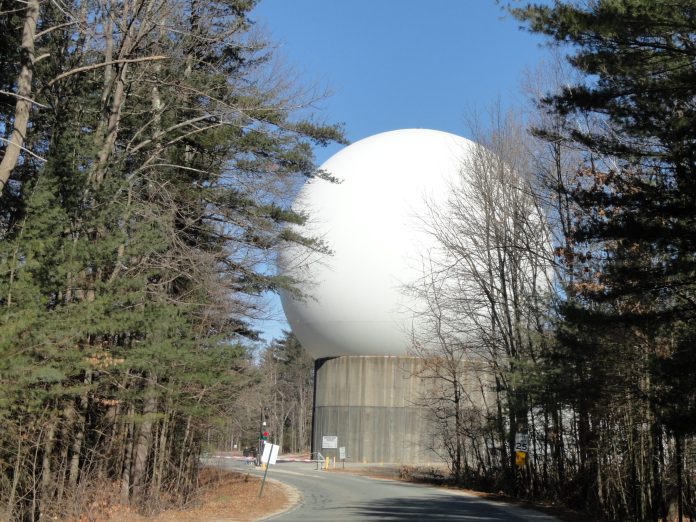
During the height of Cold War tension, when the United States and the Soviet Union were locked in a technological and ideological struggle, American military planners pursued an extraordinary experiment known as Project West Ford. Conceived in the late 1950s and executed in the early 1960s, the project aimed to create a thin artificial ring of millions of copper needles around Earth. This unusual belt would act as a passive communication system, ensuring that the U.S. could maintain global contact even if the Soviets severed undersea cables or disrupted the natural ionosphere. Although the idea may sound like science fiction today, it was a serious and carefully engineered response to a very real strategic vulnerability.
Cold War Fears and the Search for Reliable Communication
At the time, long‑distance communication depended heavily on two fragile systems: transoceanic cables and the ionosphere. Undersea cables could be cut during wartime, and the ionosphere—used to bounce radio signals over the horizon—could be disturbed by solar activity or even nuclear detonations. Military leaders worried that a sudden loss of communication could cripple U.S. command and control during a crisis. They needed a backup system that was global, passive, and nearly impossible for an adversary to disable. This challenge led researchers at MIT’s Lincoln Laboratory to propose a radical solution: placing hundreds of millions of tiny copper dipole antennas into orbit to create an artificial reflective layer around the planet.
The Concept: A Man‑Made Ionosphere of Copper Needles
The idea originated with engineer Walter E. Morrow, who suggested that millions of tiny copper wires—each just 1.78 centimeters long and about the thickness of a human hair—could act as miniature antennas. If dispersed evenly in a circular orbit roughly 3,500 to 3,800 kilometers above Earth, the needles would form a tenuous but continuous belt capable of reflecting microwave signals. This would allow radio transmissions to bounce between distant points on Earth without relying on vulnerable ground‑based infrastructure. The needles were packed into blocks of naphthalene, a substance that would sublimate in the vacuum of space, releasing the wires gradually and allowing them to spread into a uniform ring.
Early Attempts and the 1961 Failure
The first attempt to deploy the needle belt occurred in October 1961 aboard the MIDAS 4 satellite. Engineers expected the naphthalene to evaporate and the needles to disperse smoothly, but the release mechanism malfunctioned. Instead of forming a ring, the needles clumped together, rendering the experiment ineffective. This failure intensified criticism from scientists who were already uneasy about the idea of releasing millions of metal fragments into orbit. Despite the setback, the Air Force and MIT engineers refined the design and prepared for a second attempt.

The 1963 Success and the Functioning Needle Belt
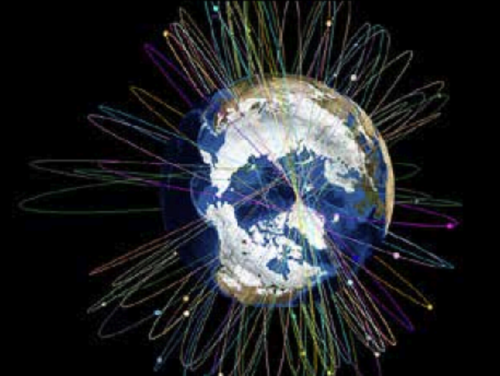
On May 9, 1963, the second West Ford payload was launched, and this time the deployment worked. Between 120 and 215 million needles successfully dispersed into a thin belt encircling Earth. Radio tests soon confirmed that the artificial ionosphere functioned as intended. Signals transmitted from one ground station were reflected off the needle cloud and received thousands of kilometers away. For a brief period, Project West Ford demonstrated that a passive, space‑based communication system was technically feasible. Yet even as the experiment succeeded, it was becoming clear that the world was moving in a different direction.
Scientific Backlash and International Concern
Project West Ford sparked immediate and widespread criticism from the global scientific community. Astronomers worried that the needle belt would interfere with optical and radio observations, complicating efforts to study the universe. The Royal Astronomical Society issued formal protests, and prominent astronomers described the project as irresponsible. The Soviet Union seized on the controversy, with the newspaper Pravda accusing the United States of “dirtying space.” The backlash contributed to growing international concern about the militarization and contamination of outer space. These debates helped shape the 1967 Outer Space Treaty, which emphasized responsible behavior, environmental stewardship, and the peaceful use of space.
The Fate of the Needles and the Legacy of the Project
The needles were designed to re‑enter the atmosphere within a few years, and most eventually did. However, some clumped together into larger masses that remain in orbit decades later. Although these remnants are tiny compared to modern space debris, they represent one of the earliest examples of long‑lasting, human‑made orbital clutter. The International Academy of Astronautics has since described Project West Ford as the most significant intentional release of space debris in history. By the time the experiment succeeded, communication satellites such as Telstar and Relay were already proving far more effective, flexible, and scalable. These active satellites quickly rendered the passive needle belt obsolete, and the project was quietly abandoned.
A Strange but Important Chapter in Space History
Today, Project West Ford stands as a fascinating reminder of the ingenuity and anxiety that defined the early space age. It reflects the urgency of Cold War technological competition, the willingness to pursue unconventional solutions, and the growing awareness that actions in space can have long‑term consequences. As modern companies deploy massive satellite constellations and concerns about orbital congestion increase, the story of West Ford remains relevant. It serves as a cautionary tale about the need for thoughtful stewardship of Earth’s orbital environment and the importance of balancing innovation with responsibility.