

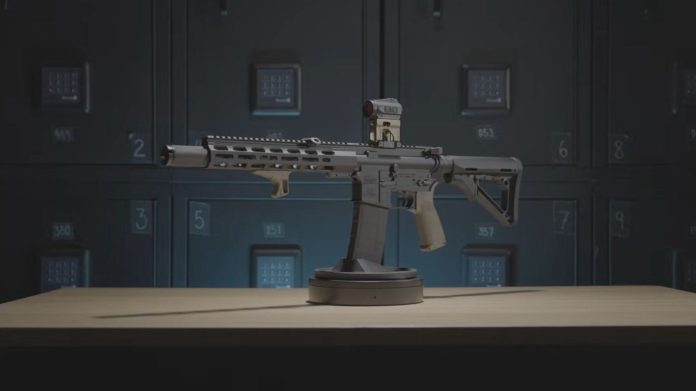
Paul Ivnitskiy from Ammunition To Go makes a straightforward claim: most shooters think they have their rifle zeroed when they’ve really just copied popular advice. Generic 25-meter, 36-yard, or 100-yard zeros can work okay for general use, but they frequently fall short on modern setups once barrel length, velocity, and especially optic height enter the equation. Ammo To Go’s new Zero Tool should help you accomplish that much more easily now.
In the video above and article (posted in full below), Ivnitskiy explains that a real zero should maximize Maximum Point Blank Range (MPBR) — the distance over which a center hold produces center hits inside the vital zone. A mismatched zero collapses that effective range and can create safety issues because the bullet may be traveling higher or lower than the shooter realizes beyond the target.
To fix the problem, Ammunition To Go created a free Zero Tool. Users simply enter their barrel length, caliber, optic type, and height, and vital zone size. The tool then calculates the optimal zero distance that gives the flattest possible trajectory within that zone, allowing shooters to aim center and hit center without extra holds or mental math.

The tool is live right now at ammunitiontogo.com/zero-tool and takes less than a minute to use. Whether you run a red dot on a short barrel or a scoped hunting rifle, running your exact setup through the tool can remove the guesswork and give you a zero that actually matches the rifle you carry.

For hunters or competition shooters, that extra precision can translate into fewer frustrating misses and more ethical, clean kills in the field. Run the numbers, verify at the range, and stop wondering if your zero is really working for the gun you built.

You Think You Zeroed Your Rifle. You Really Just Guessed.
By Paul Ivnitskiy | Ammunition To Go
Walk up to any shooter at your local range and ask them two questions:
What is the purpose of your zero, and why did you choose that distance? In our experience, most can’t answer either. Not because they’re bad shooters — but because nobody has ever cleanly articulated it to them.
Someone handed them a blanket recommendation and they never questioned it.
“Just use a 36 yard zero, it’s a great all around zero.” We’ve all heard it — swap out the distance and you’ve heard it a hundred times. 25 meters. 50 yards. 100 yards. Every instructor, every forum post, every range buddy has a number and a confident explanation to go with it. But for what setup? Based on what data? A 36 yard zero on the wrong rifle configuration can collapse your Maximum Point Blank Range to double digit distances and force multiple elevation holds at every common engagement distance. That’s not an all around zero. That’s a liability masquerading as advice.
The Variables Nobody Talks About
The deeper issue is that most shooters don’t understand how barrel length, muzzle velocity, caliber, optic height, and optic type interact to determine where their bullet actually goes. These are not interchangeable variables. They are your specific system, and changing any one of them changes your ballistics.
A 10.5 inch SBR with a Unity Riser and a red dot is a fundamentally different ballistic system than a 16 inch carbine with a 1.5 inch mount and a ballistically calibrated ACOG. Running the same zero on both is like running the same tire pressure on a sports car and a pickup truck and wondering why one handles poorly.
Your optic height alone has a dramatic effect on trajectory. The taller your mount, the steeper the launch angle required to achieve zero at a given distance — which means a higher arc, a higher peak, and a bullet that spends more of its flight path above your point of aim than you realize.
What a Zero Actually Is
Here is the definition that nobody seems to state plainly:
A zero is the distance at which you have configured your rifle so that your bullet’s trajectory stays within an acceptable hit zone across the widest possible range of distances.
That’s it. Everything else flows from that definition. The goal of a zero is not simply to make your rifle hit where you aim at one specific distance. The goal is to maximize the range over which a center hold produces a center hit — what ballisticians call Maximum Point Blank Range, or MPBR.
Blindly applying the wrong conventional zero to your specific setup forces you to memorize multiple elevation holds and collapses your MPBR. At that point you’ve lost the ability to aim center and hit center at any common engagement distance beyond conversational range.
This Is Also a Safety Issue
A bad zero doesn’t just hurt your performance. It creates a safety problem that the shooting community doesn’t discuss often enough.
Every range has the same rule — know what is beyond your target. But bullets don’t fly in a straight line. Depending on your rifle and selected zero, you could produce a heavily arced trajectory which means your round could be traveling several inches, if not a foot higher than your point of aim at distances you never considered or accounted for.
This is why we hear about stray rounds crossing property lines, traveling into neighboring zip codes, and hitting innocent bystanders. It isn’t always recklessness. Sometimes it’s a shooter who genuinely believed they knew where their bullet was going — and simply had no idea.
If you cannot account for what your bullet is doing from the muzzle out past your target at every distance, you are not running a calculated zero. You are running a hail mary.
The Solution
We built the Ammunition To Go Zero Tool to solve this problem. It takes your specific inputs — barrel length, caliber, optic type, optic height, and vital zone — and calculates the mathematically optimal zero for your exact configuration. The result is the flattest possible trajectory within your defined vital zone, extended out to your true MPBR.
Aim center. Hit center. No holds. No mental math. No guessing.
A rifle paired with an optimal zero is lethal in the hands of an average shooter. Not because of the gear. Because that shooter knows exactly what their bullet does and where it goes at every distance. That knowledge is the force multiplier.
Training still matters. It always will. But it starts with knowing your zero.
Find your optimal zero free at ammunitiontogo.com/zero-tool
Other Helpful Articles on The Truth About Guns: