

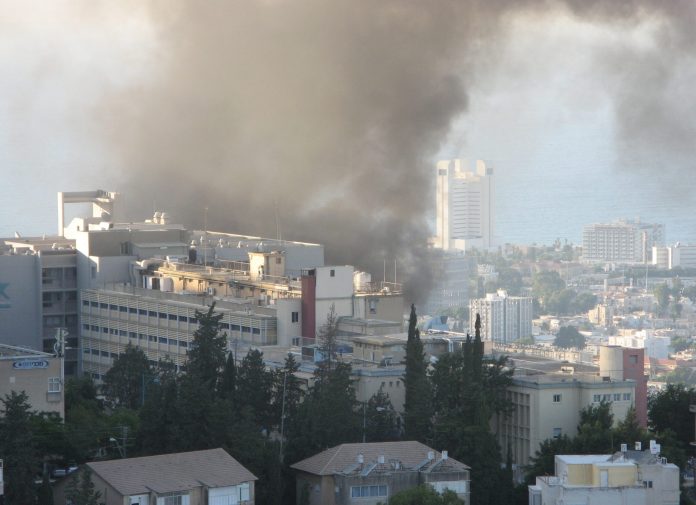
The strategic environment of the 21st century is defined by ambiguity, contested information spaces, and adversaries who deliberately blur the boundaries between peace and war. Hybrid and non‑linear warfare—terms often used interchangeably but with distinct conceptual nuances—have become central to understanding how state and non‑state actors pursue political objectives under the threshold of conventional armed conflict. These modes of competition exploit seams in Western political, legal, and military frameworks, leveraging a blend of military force, irregular tactics, cyber operations, information manipulation, economic coercion, and proxy actors.
For military and intelligence professionals, understanding hybrid and non‑linear warfare is not an academic exercise. It is a prerequisite for anticipating adversary behavior, designing resilient defense architectures, and integrating whole‑of‑government responses. In this article we will examine the conceptual foundations of hybrid and non‑linear warfare, analyze their operational manifestations, and outlins the implications for defense and intelligence communities.
Defining Hybrid Warfare
Hybrid warfare refers to the synchronized employment of multiple instruments of power—military and non‑military, overt and covert—designed to exploit an adversary’s vulnerabilities across political, social, economic, and informational domains. The concept gained prominence after Hezbollah’s 2006 conflict with Israel, where a non‑state actor combined guerrilla tactics, advanced anti‑armor systems, information operations, and political mobilization to challenge a technologically superior state.
Core Characteristics of Hybrid Warfare
Hybrid warfare typically includes:
- Integrated use of conventional and irregular forces Adversaries blend traditional military units with militias, criminal networks, or paramilitary groups to complicate attribution and response.
- Cyber and information operations Cyberattacks, disinformation campaigns, and psychological operations shape public perception, degrade trust in institutions, and create political paralysis.
- Economic and political coercion Energy leverage, sanctions circumvention, corruption networks, and influence operations weaken target states from within.
- Ambiguity and deniability Hybrid actors deliberately obscure their involvement, complicating legal and political decision‑making for defenders.
Hybrid warfare is not new—states have long combined multiple tools of power—but its scale, speed, and integration have accelerated due to globalization, digital connectivity, and the diffusion of advanced technologies.
Understanding Non‑Linear Warfare
Non‑linear warfare is a broader conceptual framework often associated with Russian strategic thought, particularly the writings attributed to General Valery Gerasimov. While Western interpretations sometimes overstate the novelty of these ideas, non‑linear warfare emphasizes the erosion of clear distinctions between war and peace, foreign and domestic, military and civilian.
Key Principles of Non‑Linear Warfare
- War is continuous and multidimensional Conflict is not confined to the battlefield; it unfolds simultaneously across political, informational, economic, and cultural spaces.
- Non‑military means may exceed the importance of military force Information dominance, political subversion, and economic leverage can achieve strategic effects without large‑scale kinetic operations.
- Societal fragmentation as a strategic objective Adversaries target social cohesion, identity politics, and institutional legitimacy to weaken states from within.
- Distributed, networked operations Non‑linear warfare relies on decentralized actors—proxies, private military companies, cyber groups—operating in parallel toward shared strategic goals.
Non‑linear warfare is less about specific tactics and more about a worldview: conflict is perpetual, and the decisive terrain is the cognitive and political space of societies.
Hybrid vs. Non‑Linear Warfare: Distinctions and Overlaps
While the terms overlap, they are not identical.
| Hybrid Warfare | Non‑Linear Warfare |
|---|---|
| Focuses on blending conventional, irregular, cyber, and informational tools | Emphasizes the erasure of boundaries between war and peace |
| Often describes operational and tactical integration | Describes a strategic and political philosophy |
| Typically applied to specific campaigns (e.g., Crimea 2014) | Applies to long‑term competition and societal influence |
| Seeks to exploit vulnerabilities across domains | Seeks to reshape the entire conflict environment |
In practice, modern adversaries employ elements of both. Russia’s operations in Ukraine, China’s “Three Warfares,” Iran’s proxy networks, and North Korea’s cyber-enabled coercion all demonstrate hybrid and non‑linear characteristics.
Operational Manifestations in the Contemporary Security Environment
1. Cyber Operations as Strategic Tools
Cyber capabilities allow adversaries to:
- Disrupt critical infrastructure
- Steal sensitive military and industrial data
- Influence political processes
- Conduct psychological operations at scale
Cyber operations are attractive because they offer plausible deniability, low cost, and global reach.
2. Information Manipulation and Cognitive Warfare
Information operations now target entire populations, not just military forces. Techniques include:
- Deepfakes and synthetic media
- Social media botnets
- Narrative warfare and conspiracy amplification
- Targeted disinformation campaigns
The objective is to erode trust, polarize societies, and create decision paralysis.
3. Proxy and Surrogate Forces
States increasingly rely on:
- Militias
- Private military companies
- Criminal organizations
- Ideologically aligned non‑state actors
These groups provide deniability, extend operational reach, and complicate escalation dynamics.
4. Economic and Technological Leverage
Adversaries weaponize:
- Supply chains
- Rare earth minerals
- Energy dependencies
- Foreign investment
- Technology transfer
Economic coercion can achieve strategic effects without firing a shot.
5. Legal and Normative Manipulation (“Lawfare”)
Actors exploit international legal ambiguity to:
- Delay responses
- Challenge legitimacy
- Create diplomatic friction
- Shape global narratives
This is particularly evident in maritime disputes, cyber norms, and sovereignty claims.
Implications for Military and Intelligence Professionals
1. The Need for Integrated, Whole‑of‑Government Responses
Hybrid and non‑linear threats cannot be countered by military force alone. Effective defense requires:
- Intelligence fusion across agencies
- Civil‑military coordination
- Public‑private partnerships
- Diplomatic and economic tools
- Strategic communication capabilities
The U.S. and allied systems—often siloed and bureaucratic—must adapt to adversaries who operate seamlessly across domains.
2. Intelligence Requirements in a Non‑Linear Environment
Intelligence professionals must expand beyond traditional military indicators. Key priorities include:
- Mapping influence networks
- Tracking disinformation flows
- Monitoring economic coercion
- Identifying proxy relationships
- Understanding cultural and societal vulnerabilities
The intelligence cycle must accelerate to match the speed of digital information operations.
3. Enhancing Resilience and Deterrence
Deterrence in hybrid conflict is complex because attribution is difficult and responses must be calibrated. Resilience becomes a form of deterrence:
- Hardened infrastructure
- Redundant communication systems
- Cyber defense and rapid recovery capabilities
- Public education on information manipulation
A society that is resilient to disruption is harder to coerce.
4. Adapting Military Doctrine and Force Structure
Modern forces must be prepared for:
- Multi‑domain operations
- Distributed command and control
- Integration with cyber and information units
- Rapid decision‑making under ambiguity
- Operating in contested information environments
Training must incorporate cognitive warfare, information denial, and cross‑domain synchronization.
5. Legal and Ethical Considerations
Hybrid warfare challenges established norms:
- What constitutes an armed attack?
- How should states respond to deniable aggression?
- What thresholds justify collective defense under alliances?
Military and intelligence professionals must navigate these gray zones while upholding democratic values.
Final Thoughts
Hybrid and non‑linear warfare represent the strategic reality of contemporary conflict. Adversaries exploit ambiguity, leverage non‑military tools, and target societal cohesion to achieve political objectives without triggering conventional military responses. For military and intelligence professionals, the challenge is not merely to understand these concepts but to operationalize responses that are agile, integrated, and resilient.
Success in this environment requires a shift in mindset: from viewing conflict as episodic and domain‑specific to recognizing it as continuous, multidimensional, and deeply intertwined with political, economic, and informational systems. The future of national security will depend on the ability to anticipate hybrid threats, counter non‑linear strategies, and defend the cognitive, digital, and societal foundations upon which modern states rely.