

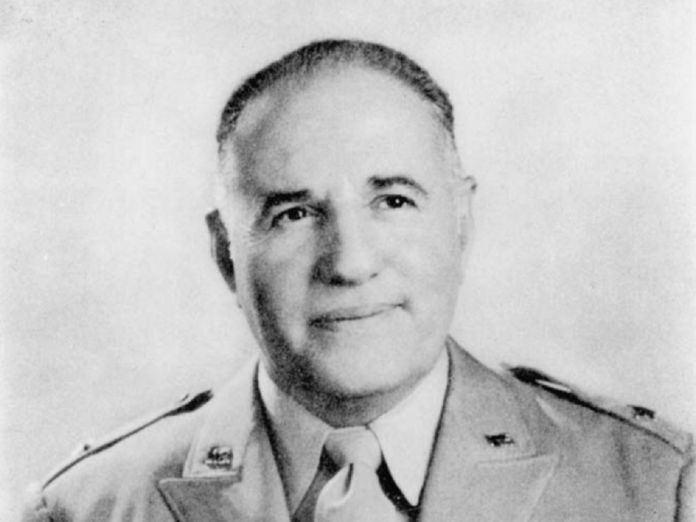
Jean (John) Valentin Grombach, who led the Pond in intelligence operations from 1942 to 1955.
When the subject of U.S. intelligence operations comes up, names like the Office of Strategic Services (OSS) and the Central Intelligence Agency (CIA) usually come to mind. However, between 1942 and 1955, a lesser-known and secretive intelligence organization called The Pond operated discreetly under the U.S. War Department, gathering intelligence in ways that were deeply covert. This mysterious agency was created as an alternative to the OSS and later continued its espionage activities until bureaucratic conflicts and internal scrutiny led to its demise.
Organization
The origins of The Pond date back to the early months of World War II. In 1942, Brigadier General Hayes Kroner of the Military Intelligence Service sought to establish a small, highly secret intelligence operation that could function independently from the OSS. The OSS, founded by William Donovan, was known for its relatively bold intelligence-gathering methods, which relied on a broad network of agents. Kroner’s vision was different—he wanted an intelligence entity that worked discreetly, valuing deep secrecy over expansive coverage.
To lead this endeavor, Kroner chose U.S. Army Captain John V. “Frenchy” Grombach, born Jean Valentin de la Salle Grombach, an experienced intelligence officer with strong anti-Communist leanings. Grombach had previously worked under Donovan but became increasingly critical of his approach, viewing him as a publicity-seeking figure whose reliance on large networks undermined the effectiveness of covert intelligence operations. This ideological divide eventually led to the formation of The Pond as an alternative to Donovan’s OSS.
Within the U.S. State Department, The Pond was known by the codename GROUNDHOG. It operated as a joint intelligence initiative between the War and State Departments, allowing it to function with a unique level of secrecy and independence. Unlike other intelligence agencies, The Pond embedded Foreign Service Officers (FSOs) within U.S. embassies in countries where it conducted operations. Each designated Pond officer was provided with secret funds under their control and maintained direct, confidential communications with the State Department.
James McCargar, who served as an FSO in Budapest from 1946 to 1947, was one of the notable Pond officers. During his tenure, McCargar played a crucial role in intelligence operations in Hungary, gathering information on Soviet activities and Communist influence in the region.
Transition to a Semi-Private Entity
While The Pond was initially a government intelligence organization under the War Department, it gradually evolved into a semi-private entity. Unlike the OSS, which operated under direct government control, The Pond sought to maintain independence by using private corporations as cover for its espionage activities.
By the late 1940s, The Pond functioned outside direct government oversight, working under contracts rather than as an official agency. It was deeply secretive, avoiding bureaucratic interference and relying on private-sector connections to gather intelligence. However, it was still funded by the U.S. government and maintained ties with agencies like the State Department and the CIA.
The agency employed personnel from large multinational corporations such as American Express, Chase National Bank, and Philips, embedding intelligence operatives within these companies to collect information. This approach allowed The Pond to operate discreetly, avoiding the scrutiny that government-affiliated intelligence agencies often faced.
Grombach maintained an obsessive level of confidentiality, never revealing the identities of his sources, which consisted of vast network of over 2,500 field personnel across 32 countries. Despite being an Army intelligence operation, The Pond’s existence was deliberately concealed from the Office of Naval Intelligence, ensuring that even within the U.S. military, only select individuals were aware of its activities.
It remains unclear whether President Truman himself was ever fully informed about The Pond’s operations. However, after World War II, Truman made the decision to dismantle the OSS, largely influenced by Grombach’s reports, which criticized the agency’s structure and effectiveness.
Operational Methodology
One of The Pond’s most defining features was its covert approach to intelligence gathering. While the OSS relied on a broad structure with agents embedded in different sectors, The Pond operated through a network of private individuals, businessmen, and multinational corporations. Rather than government-employed spies, The Pond utilized assets from American Express, Chase National Bank, Philips, and other corporate entities to gather intelligence in foreign countries.
The agency’s secrecy allowed it to conduct clandestine operations with minimal interference. Its focus was primarily on counterintelligence, identifying and tracking Communist activities abroad, particularly in Eastern Europe, Latin America, and parts of Asia. The Pond collected intelligence from a variety of sources, including former Nazi officials, Soviet defectors, and even figures with criminal backgrounds.
One of its more unusual assets was a French serial killer who, despite his notorious background, provided useful intelligence on underground networks. The agency demonstrated a willingness to work with unconventional figures, believing that secrecy and effectiveness outweighed traditional moral concerns.
Starting in 1942, Grombach, as the leader of The Pond, collaborated with Alexander Barmine, a Soviet military intelligence officer who had defected to the United States in 1937. Together, they sought to uncover a list of Soviet agents allegedly embedded within the OSS. However, their findings were largely ignored by the U.S. government, as the Soviet Union had become a crucial ally in the fight against Nazi Germany. At the time, Washington prioritized wartime cooperation over internal espionage concerns, leaving Grombach’s warnings about Soviet infiltration unaddressed.
Grombach vs. Donovan
Grombach’s relationship with Donovan remained tense throughout their careers. Although Grombach had once worked under Donovan, he soon distanced himself from the OSS, disapproving of Donovan’s highly publicized intelligence operations.
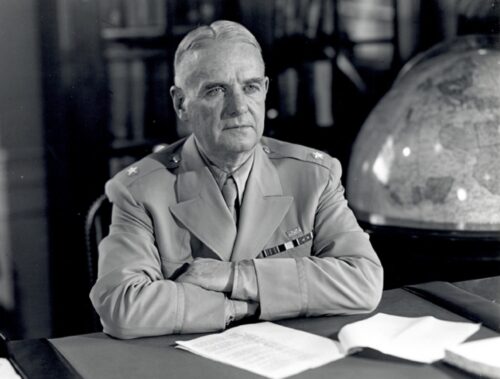
Donovan, a decorated war hero, was known for his ambitious vision of a centralized intelligence agency modeled after British intelligence. He advocated for large-scale espionage operations, psychological warfare, and covert missions, believing that intelligence should be gathered through an expansive network of operatives.
Grombach, however, viewed Donovan’s methods as reckless, arguing that true intelligence work needed to be secretive and managed by an elite, tightly controlled network. He believed Donovan’s approach exposed too many assets and lacked the discretion necessary for effective counterintelligence. This ideological divide led to increasing friction between the two men, with Grombach favoring a more compartmentalized and independent intelligence structure.
A notable instance of this rivalry occurred when Donovan was forced to cease all contact with Philips, a multinational corporation that had intelligence value, leaving it exclusively under Grombach’s control. This competition for resources and influence further fueled tensions between The Pond and the OSS, as well as later conflicts between The Pond and the CIA.
Donovan’s OSS was ultimately dismantled in 1945, largely due to concerns about its broad operational scope and inefficiencies. While Donovan had hoped to transition the OSS into a permanent intelligence agency, President Truman instead opted to dissolve it, later forming the CIA in 1947.
Grombach’s reports criticizing the OSS played a role in this decision, reinforcing his belief that intelligence should remain independent and deeply covert. Grombach’s disdain for bureaucratic oversight extended beyond Donovan. He later clashed with CIA officials who sought to centralize intelligence operations, further cementing his belief that intelligence gathering should be conducted outside government control and remain deeply secretive.

Cold War Operations
During the late 1940s, as Cold War tensions began to rise, The Pond increased its focus on countering Soviet influence. Unlike the OSS, which had been dismantled in 1945 and replaced by the CIA in 1947, The Pond retained its independence and operated quietly. Its intelligence network spanned several continents, gathering information on Communist movements, suspected spies, and political dissidents.
A notable operation took place in 1947 when The Pond orchestrated the escape of Hungarian political figure Zoltan Pfeiffer and his family from Soviet-controlled Budapest. Using covert methods, The Pond helped Pfeiffer evade Soviet roadblocks and safely flee into Western Europe, avoiding capture.
The agency also played a role in tracking Soviet espionage efforts within Latin America, compiling reports on suspected Communist sympathizers and agents working undercover in South American governments.
Grombach initiated Project 1641, a study focused on communist subversion within the U.S. government. This project aimed to compile intelligence reports that had been discarded by Alfred McCormack, a key figure in military intelligence. Grombach also sought to identify suspected communists working under McCormack and others within government agencies. The list of alleged communist operatives became a controversial aspect of Grombach’s intelligence efforts, further fueling tensions between The Pond and mainstream intelligence organizations
The Pond and the CIA
By the early 1950s, The Pond’s secretive nature drew increasing scrutiny from rival intelligence agencies, particularly the newly established CIA. While The Pond valued discretion and operated independently, the CIA favored a more centralized intelligence-gathering system, viewing The Pond as an unconventional entity outside standard government oversight.
John Grombach, the head of The Pond, was deeply skeptical of the CIA’s bureaucratic structure, believing intelligence should be gathered independently without excessive government interference. His preference for secrecy and autonomy made The Pond a subject of concern, especially as the U.S. government sought to consolidate intelligence efforts under a single framework. Grombach’s associations with prominent anti-Communist figures, including Senator Joseph McCarthy, added to the controversy surrounding The Pond, though the extent to which these connections directly undermined its credibility remains debated.
In 1955, The Pond was phased out as part of broader efforts to centralize post-war intelligence operations. Though it operated separately from major intelligence agencies, it maintained complex relationships with both the FBI and the CIA. Grombach, known for his secrecy and strong anti-communist stance, exercised tight control over The Pond’s activities, fostering skepticism among intelligence officials. Reports suggest that internal conflicts and concerns about the reliability of its intelligence contributed to the CIA’s decision not to integrate The Pond into its operations
Legacy
Despite its limited lifespan, The Pond left a significant impact on U.S. intelligence history. It demonstrated the viability of deep-cover intelligence gathering and set a precedent for future covert operations. Although it never gained the prominence of the CIA, its methods influenced how intelligence agencies approached secrecy and counterespionage.
Today, The Pond remains one of the most enigmatic agencies in American intelligence history. While much of its work remains undisclosed, the discovery of its archives has provided a rare glimpse into the clandestine world of Cold War-era espionage.
Resource
Central Intelligence Agency
CIA.gov