

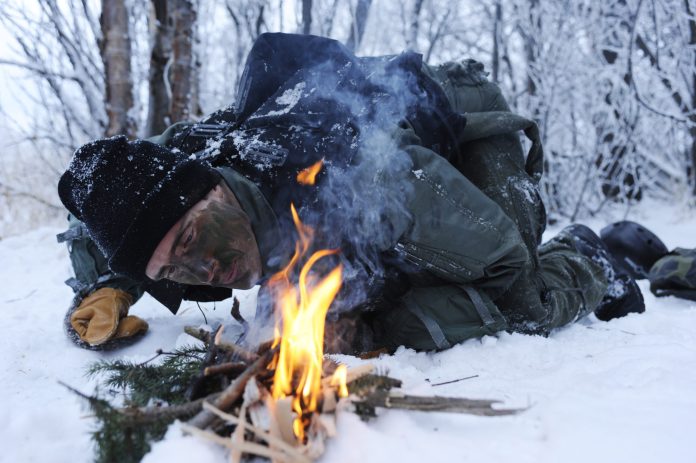
U.S. Air Force 1st Lt. Matthew Feeman, of the 80th Fighter Squadron out of Kunsan Air Base, South Korea, builds a fire to help combat frostbite and hypothermia during a survival, evasion, resistance and escape (SERE) exercise in support of Red Flag – Alaska near Eielson Air Force Base, Alaska, on Oct. 14, 2008. The appearance of U.S. Department of Defense (DoD) visual information does not imply or constitute DoD endorsement. U.S. Air Force photo by Senior Airman Jonathan Snyder.
To say that we owe our civilization to fire isn’t an overstatement. Fire was a cornerstone of human evolution, shaping survival, technology, and society itself. In a modern survival scenario, fire can make the difference between life and death. The ability to reliably start a fire under harsh or unpredictable conditions is a fundamental survival skill we should all have.
Starting A Fire
Fire is a chemical reaction known as combustion, in which a material rapidly oxidizes, releasing heat and light. For a fire to ignite and sustain itself, three elements must be present: heat, fuel, and oxygen—together forming what’s known as the fire triangle. Heat serves as the ignition source, raising the fuel to its combustion temperature. Fuel provides the material that burns, sustaining the fire, while oxygen supports the chemical reaction necessary for combustion. Building an efficient wood-burning fire requires careful attention to tinder, kindling, and fuel, ensuring a steady burn and effective heat output.

Selecting the right tinder is crucial for successfully starting a fire. The best tinder is dry, fluffy, and highly flammable to catch sparks easily. Natural options include fine wood shavings, dry grass, birch bark, and cattail fluff. Birch bark is especially effective because it contains natural oils that burn easily, even in damp conditions. Fatwood, which is resin-rich, is another excellent choice as it ignites quickly and burns hot.
For prepared or DIY tinder, cotton balls soaked in petroleum jelly are a popular option because they catch sparks effortlessly and burn for an extended period. Char cloth, made by heating natural fabric in a low-oxygen environment, is another reliable tinder that can ignite from small sparks. Dryer lint is also widely used due to its flammability. Additionally, some commercially available products, such as Tinder Quik fire tabs or magnesium shavings, provide a dependable and consistent ignition source.
Magnesium, in particular, is highly effective due to its ability to ignite at extremely high temperatures and burn intensely, even in damp conditions. By shaving thin strips from a magnesium block and combining them with other tinder materials, you can create a powerful fire-starting aid that produces a hot, sustained flame.
In damp environments, carrying a small amount of pre-prepared tinder can make fire-starting much easier, ensuring that you can ignite a flame even in challenging conditions. Regardless of the type of tinder used, arranging it in a loose and airy fashion allows oxygen to flow, aiding combustion and ensuring a successful fire-starting experience.

Kindling follows next, consisting of small sticks or thinly split pieces of wood that catch fire from the tinder and intensify the burn. Resin-rich woods, such as fatwood (taken from the heartwood of pine) resist moisture and burn intensely. The goal of kindling is to create enough sustained heat to ignite larger fuel pieces. Each of these elements plays a crucial role in ensuring the fire builds gradually and remains stable.
Once the tinder and kindling are burning steadily, it’s time to add fuel, which consists of larger wood logs or chunks that maintain the fire for extended periods. Proper fuel selection is key. Dense hardwoods such as oak or maple burn more efficiently and provide long-lasting heat compared to softer woods.
Arranging the fuel strategically, such as in a log cabin or teepee formation, allows proper airflow, which enhances combustion and reduces smoke. With the right combination of materials and structure, you can create a long-lasting fire
Primitive Fire-starting Methods
Primitive fire-starting methods rely on friction-generated heat and require significant skill, effort, and dry materials to create an ember. They are highly dependent on proper technique, making them difficult to use in wet or humid conditions. The hand drill, bow drill, and fire plough are three widely used primitive methods.
-
Hand Drill: The hand drill method involves twirling a dry wooden spindle against a softwood base. It’s physically exhausting and requires ideal dry conditions for success.
-
Bow Drill: The bow drill method involves constructing a bow, selecting appropriate wood, and maintaining a steady rhythm. It is more efficient than a hand drill, but beginners often struggle to generate enough heat to create an ember.
-
Fire Plough: The fire plough method consists of rubbing a hardwood stick against a softwood groove to produce friction-based heat. It takes considerable time and arm strength to form an ember.
While these primitive techniques can work in emergency situations and are good to learn, their high energy demands and difficulty make them impractical in most scenarios and shouldn’t be counted on.

Lighters
The most efficient way to start a fire is with an open flame. A good lighter cannot be matched for its all-around utility and convenience. It will always be the quickest and simplest method of starting a fire. Most of the time it’s all that you’ll need.
Zippo® lighters are popular survival lighters. It features a simple, bulletproof design with a flint-wheel ignition system and a wick. All parts are replaceable, and it comes with a lifetime warranty. It can use almost any liquid fuel that will ignite when exposed to a flame. If you don’t have fuel or a wick, you can still use the striker to ignite light dry tinder.
Zippos do have some major downsides. The the fuel evaporates quickly with the standard housing. It’s not weather resistant. And they have a candle-like flame, making it difficult to ignite things on the ground and in windy conditions.
There are several options for weather resistance and fuel evaporation control. The Thyrrn PyroVault 2.0 offers a protective exoskeleton for the Zippo, featuring a full gasket seal and one-handed operation to minimize fuel evaporation and enhance durability. Another excellent choice is the Exotac titanLIGHT™, a rugged, waterproof, evaporation-proof liquid lighter that utilizes a flint-wheel ignition system and a wick similar to the Zippo.
Butane lighters are less prone to evaporation and are available in direct flame (torch-like) models. However, they don’t perform well in colder temperatures. The boiling point of butane is approximately 32.9° F (0.5° C) at sea level. Additionally, direct flame butane lighters don’t work at elevations greater than around 8,000 feet above sea level.
Disposable butane lighters have a candle-like flame similar to the Zippo. They perform better at higher elevations than their direct-flame counterparts, although cold temperatures are still an issue. They’re inexpensive, but that comes at a price. They are more prone to breakage and failure. Exotac offers its fireSLEEVE™ waterproof, protective case for disposable BIC® lighters.

Waterproof Matches
Standard matches are moisture-sensitive making them a poor choice in survival scenarios. . Waterproof matches are an excellent fire-starting tool due to their ability to ignite even when exposed to moisture, making them a reliable choice in wet or humid environments. Unlike standard matches, they are treated with protective coatings that prevent water absorption, ensuring they consistently light when struck.
Waterproof matches are somewhat expensive, but you can make your own. Perhaps the best way is to soak matches in turpentine and let them dry. Another way to dip the match heads into clear nail polish and let dry. A third way is to dip each match head in melted paraffin or candle wax and allow it to harden.
Waterproof matches have drawbacks. They can only be used once and are susceptible to strong winds, which may extinguish the flame before it ignites tinder or kindling
Ferro Rods
A ferrocerium rod, commonly known as a ferro rod, is one of the most effective fire-starting tools for survival scenarios. When scraped with a hard-edged object, it generates hot sparks capable of igniting tinder. Ferro rods are made from ferrocerium, a synthetic pyrophoric alloy that produces sparks exceeding 3,000°F (1,650°C), making them highly reliable for fire-starting in various conditions.
Ferro rods function through oxidation and friction. When scraped with a steel striker or knife spine, tiny shavings of ferrocerium are exposed to oxygen, causing them to combust instantly. Due to their reliability in wet conditions and extreme cold, ferro rods are widely used in survival and outdoor settings.

To use a ferro rod effectively, begin by gathering dry tinder. Hold the ferro rod firmly in one hand and position it near the tinder. Using a metal striker or the spine of a knife, scrape the rod forcefully at a sharp angle. This action generates hot sparks that land on the tinder, igniting it into flame. Once the fire starts, gently feed it with small twigs and progressively larger sticks to build a sustainable fire.
Technique plays a crucial role in achieving a spark. While several methods can be used depending on the ferro rod, with a larger ferro rod I prefer to keep the striker steady and pull the ferro rod back rather than pushing the striker forward. This approach helps maintain control and prevents disturbing the tinder, which is crucial for ignition. It also ensures a consistent angle and pressure, improving spark generation. Holding the striker at a sharp angle to the rod maximizes spark production. Additionally, some ferro rods come coated with a protective layer that must be scraped off before they can produce sparks efficiently.
Practicing beforehand in different conditions, such as windy, cold, or damp environments, will ensure you can use the ferro rod effectively when you really need it. With patience and the right materials, you can master fire-starting and enhance your outdoor survival skills. Ferro rods typically last between 8,000 to 12,000 strikes, though their lifespan depends on several factors, including rod diameter, composition, frequency of use, and striking technique.
Ferro rods are highly susceptible to oxidation. To extend their lifespan during storage, they are often treated with protective coatings, such as magnesium alloy treatments, oxide layers, or manually applied substances like wax or petroleum jelly. Despite these measures, oxidation can still occur over time. Fortunately, a quick sanding of the rod’s surface effectively removes corrosion, restoring its ability to produce efficient sparks.
Traditional Flint and Steel
Flint and steel is one of the oldest fire-starting methods. It has stood the test of time as one of the most reliable fire-starting methods, valued for its simplicity and effectiveness. It involves striking a piece of high-carbon steel against a hard rock such as flint, chert, or quartz to generate sparks. These sparks must land on highly flammable tinder to successfully ignite a fire. Proper technique is essential for consistent results. Stainless steel is generally unsuitable as a striker for this method due to its high chromium content, which diminishes its ability to produce sparks. However, it can still function effectively when used with ferro rods.

Final Thoughts
Fire is an indispensable resource in survival situations. Redundancy in fire-starting is crucial for ensuring reliability in unpredictable scenarios. Depending on a single ignition method increases the risk of failure, particularly in extreme weather or equipment malfunctions. Having redundant methods is crucial.
Sources
BIC
us.bic.com
ESSE Knives/ Randall’s Adventure Training & Equipment Group
eseeknives.com
Exotac
exotac.com
Graybeard Green Beret
graybeardedgreenberet.com
Thyrm
thyrm.com
Zippo
zippo.com
*The views and opinions expressed on this website are solely those of the original authors and contributors. These views and opinions do not necessarily represent those of Spotter Up Magazine, the administrative staff, and/or any/all contributors to this site.