

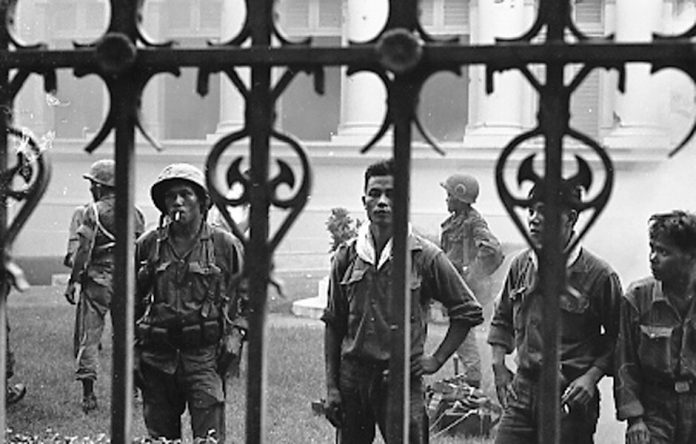

I still recall my Western Civilization teacher Mr. Archer discussing this concept when I was in the 10th grade. My father discussed it with me, about an the 1963 South Vietnamese coup d’état of President Ngô Đình Diệm and the Personalist Labor Revolutionary Party of South Vietnam. They were deposed by a group of CIA-backed Army of the Republic of Vietnam officers. My father was there from 1962-1972. The term comes from French coup d’État, literally meaning a ‘stroke of state’ or ‘blow of state’.
A coup d’état, is a sudden and illegal seizure of political power by a group of individuals, typically within a government or military, aiming to overthrow the existing authority and replace it with their own regime. The characteristics of a coup d’état include:
- Suddenness: A coup d’état is typically carried out with little or no warning, catching the existing government or authorities off guard.
- Coordinated Effort: Successful coups usually involve a group of conspirators working together to achieve their common goal of seizing power.
- Targeting Key Institutions: The coup plotters often target key institutions of the state, such as government buildings, communication centers, and military installations, to gain control over crucial levers of power.
- Ousting Leaders: The primary objective of a coup is to remove the current political leaders or ruling regime from power, either through force or intimidation.
- Replacement of Government: Once the coup is successful, the conspirators may install a new government or declare themselves as the ruling authority.
Coup d’états have been a recurring phenomenon throughout history, often occurring in countries with political instability, governance issues, or dissatisfaction with the ruling leadership. The motivations behind coups can vary widely, including ideological differences, power struggles within the ruling elite, socioeconomic grievances, or opposition to perceived corruption or authoritarianism. The 1991 Soviet coup d’état attempt, also known as the August Coup, was a failed attempt by hardliners of the Soviet Union’s Communist Party to forcibly seize control of the country from Mikhail Gorbachev, who was Soviet President and General Secretary of the Communist Party at the time.
Coup d’états can have significant implications for the affected country and its people. Successful coups may lead to changes in policies, governance, and foreign relations, while unsuccessful ones can result in severe repercussions for the conspirators, such as imprisonment, exile, or even death.

Niger June 2023
It’s essential to note that coup d’états are generally viewed as undemocratic and illegal means of political change. They are often condemned by the international community and can lead to diplomatic isolation or sanctions against the country where the coup occurred. In contrast, peaceful and democratic means of political change, such as elections and public participation, are widely encouraged and respected internationally.
Examples of Coup d’Etats: