

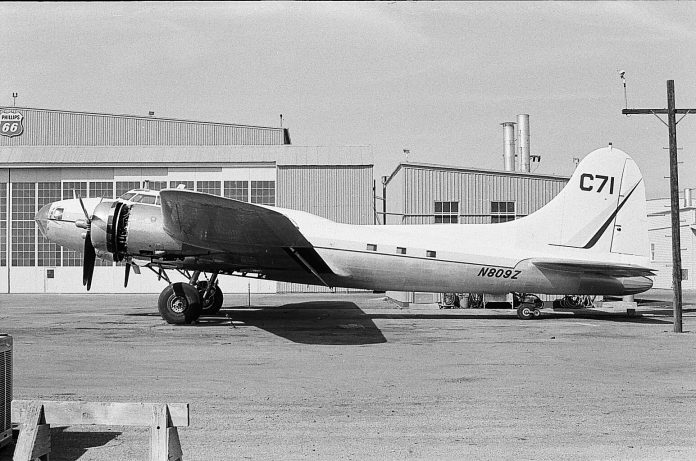
The Boeing B-17G that was used in the CIA’ “Operation COLDFEET” and also in the film “Thunderball”. Photographed at Pinal County Airpark/Marana Airpark, Arizona, 28 January 1975. CIA provide B17 used in film Thunderball. Photo credit: Uli Elch / CC BY-SA 4.0.
The classic James Bond film Thunderball turns 60 this year. What many don’t know about is is the actual involvement of the CIA in the production of the film. The collaboration between the CIA and Hollywood during the production of Thunderball (1965) stands out as a fascinating chapter in the overlap of real-world intelligence and fictional storytelling. This partnership provided a unique glimpse into how the Agency sought to subtly influence public perception while showcasing the often-mythologized world of espionage. It highlights a compelling interplay between covert operations and popular culture, underscoring how cinematic narratives can reflect—and even shape—global intrigue.
A Closer Look at Thunderball
Thunderball marked the fourth installment in the legendary James Bond film franchise, adapting Ian Fleming’s novel of the same name. Directed by Terence Young, the movie featured the charismatic Sean Connery in his signature role as 007. The plot follows James Bond on a high-stakes mission to recover two stolen nuclear warheads, taken by the notorious criminal organization SPECTRE. Under the leadership of the villainous Emilio Largo (portrayed by Adolfo Celi), SPECTRE threatens global destruction, prompting Bond to race against time to avert catastrophe. Much of the film’s action unfolds across the picturesque Bahamas, adding glamour to the tense, action-packed narrative.
Upon its release, Thunderball became a massive box-office hit, setting a new benchmark as the most successful Bond film of its time. The movie dazzled audiences with its innovative underwater sequences, impressive set designs, and an array of ingenious gadgets—elements that became hallmarks of the James Bond legacy.

Fact Meets Fiction
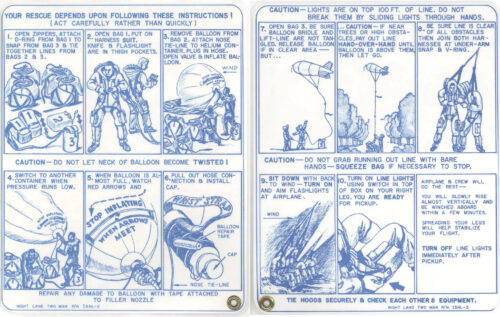
One of Thunderball‘s most memorable sequences showcased a daring rescue utilizing a Skyhook, known formally as the Fulton Surface-to-Air Recovery System (STARS). This technology, which dramatically lifted James Bond and his companion from the ocean’s surface, was a real CIA invention: Developed during the 1950s and refined into the 1960s, this system allowed for rapid aerial extractions of individuals or materials from remote or otherwise inaccessible locations. Using a specially designed harness, a high-strength nylon line, and an aircraft equipped to perform the retrieval, the Fulton Recovery System exemplified the ingenuity of Cold War-era espionage technology.
The CIA played a significant role in bringing authenticity to this aspect of the film. Agency officials collaborated closely with the production team, sharing technical knowledge about the Skyhook system and arranging for a B-17 aircraft and its crew to participate in the filming process. Their support ensured that the Skyhook scene was both visually captivating and true to the operational capabilities of the real technology.
As a gesture of appreciation, senior CIA officials who contributed to the project were invited to attend the film’s premiere in Washington, D.C. This rare, behind-the-scenes engagement with Hollywood allowed the Agency to spotlight its technological achievements while maintaining discretion about its broader activities.
Vital Real-World Tool
The Skyhook system was vital tool for real-world operations during the Cold War. One notable instance of its use was during Operation COLDFEET in 1962. This daring mission sought to extract intelligence from an abandoned Soviet Arctic drifting ice station. Given the station’s remote and precarious location amidst unstable ice, conventional retrieval methods were unfeasible. To overcome these challenges, the CIA utilized the Fulton system to airlift two operatives along with the crucial intelligence they had uncovered.
The B-17 employed in this mission was a specially modified B-17G, designated N809Z. This aircraft dropped and then extracted the two Americans who investigated the abandoned Soviet Arctic drifting ice station. Equipped with the innovative Skyhook system, the B-17 enabled the successful extraction. The operation was a collaborative effort between the CIA and the U.S. Navy’s Office of Naval Research (ONR), showcasing the system’s effectiveness in even the most extreme and inhospitable conditions. The B-17 used in Operation COLDFEET is the same B-17 that was subsequently used in Thunderball.
The Skyhook system was subsequently used from 1965 to 1996 across several variants of the C-130 Hercules, including the MC-130 and HC-130, as well as the C-123 Provider. Despite its operational successes, the Skyhook system was ultimately retired in September 1996. Its phaseout was prompted by the emergence of advanced recovery technologies, such as long-range helicopters like the MH-53 Pave Low and HH-60 Pave Hawk, and versatile tilt-rotor aircraft like the V-22 Osprey. These newer platforms offered safer and more flexible alternatives, rendering the Fulton system obsolete.
Cold War Context and Cultural Resonance
The partnership between the CIA and the makers of Thunderball unfolded against the backdrop of the Cold War—a time when espionage narratives held a magnetic appeal for the global audience. Ian Fleming’s novels had already introduced readers to the enduring friendship between James Bond and CIA officer Felix Leiter, reflecting the strong alliance between British and American intelligence agencies. The film adaptation carried this theme forward, blending fact and fiction to craft an engrossing tale of intrigue and adventure.
The inclusion of the Skyhook in Thunderball served not only as a showcase of the CIA’s technological prowess but also as a symbol of the glamorous and enigmatic world of spycraft. By integrating real-life innovations into its storyline, the film captivated audiences while subtly reinforcing the mystique of intelligence work.
A Lasting Legacy
The Skyhook’s cinematic debut in Thunderball left an indelible mark on popular culture, influencing depictions of similar technology in later films such as The Dark Knight and The Green Berets. The CIA’s involvement in the production of Thunderball remains a notable example of its early collaboration with Hollywood.
Decades later, Thunderball continues to be celebrated as a standout entry in the James Bond series, revered for its thrilling narrative, groundbreaking technical elements, and cultural impact. The partnership between the CIA and the filmmakers stands as a testament to the unexpected intersections between reality and imagination, highlighting how the covert operations of the intelligence world have, in turn, shaped cinematic history.
Resources
Central Intelligence Agency
CIA.gov
The Official James Bond 007 Website
007.com